
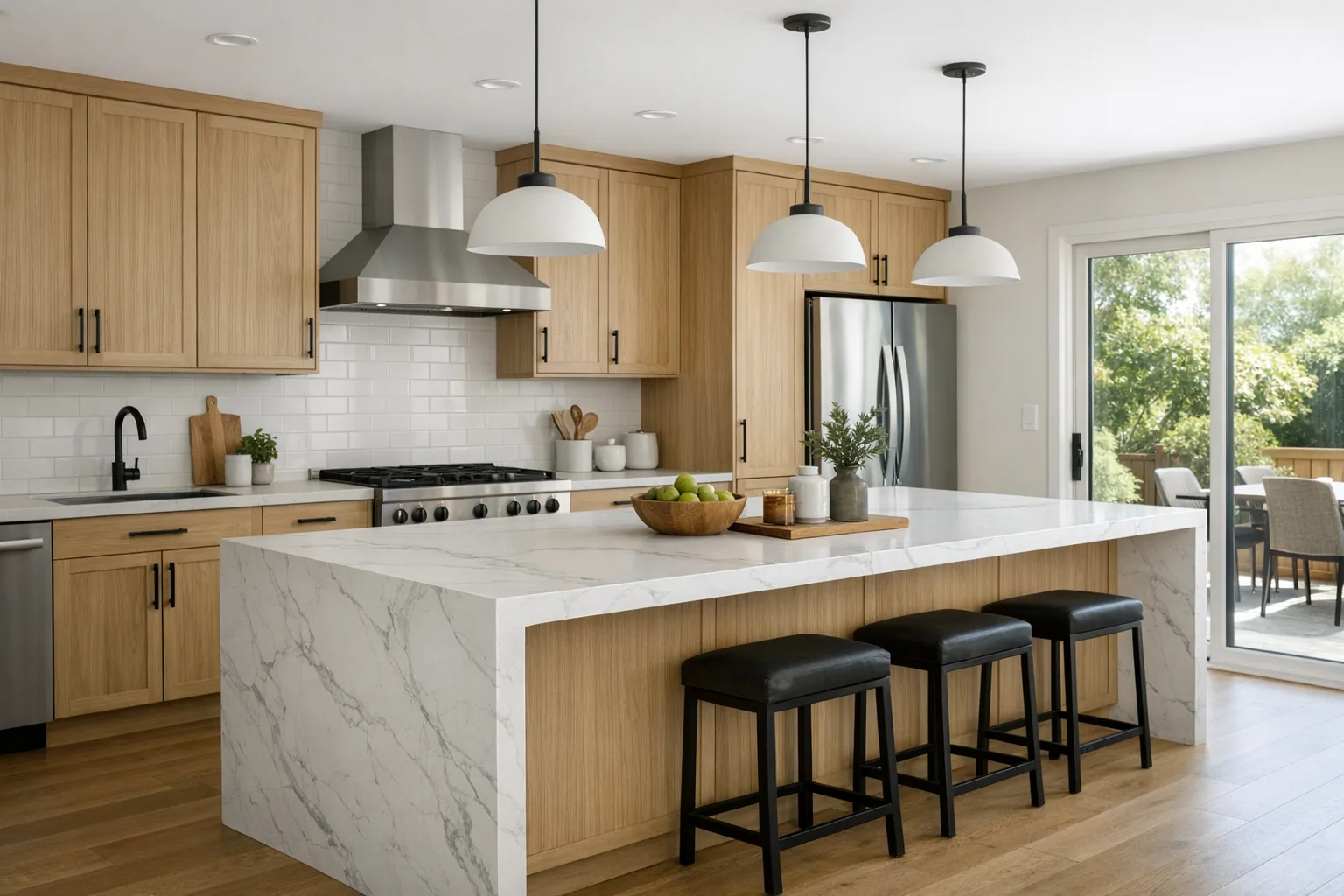
Choosing the right countertop comes down to how you cook, how much maintenance you’ll tolerate, and whether you’re remodeling around existing cabinets and layout. This guide to kitchen countertops Concord CA homeowners commonly consider compares the most practical materials—so you can narrow your shortlist before you start collecting samples and bids.
Because every kitchen has different cabinet conditions, lighting, and appliance plans, it helps to decide your “must-haves” first (durability, low upkeep, natural stone look, budget flexibility), then select the material and edge details that support those priorities.
Quick comparison: the most common countertop materials
Most Concord kitchens end up choosing quartz or a natural stone (granite or quartzite) for a balance of durability and appearance, while laminate, solid surface, tile, butcher block, concrete, and stainless steel fit more specific budgets or design goals. Use the table below to compare real-life tradeoffs like staining, heat tolerance, and maintenance—not just the showroom look.
| Material | Best for | Watch-outs | Maintenance level |
|---|---|---|---|
| Quartz (engineered) | Low-upkeep, consistent patterns, busy households | Heat can damage; seams still matter | Low |
| Granite (natural stone) | Natural variation, good heat resistance, durability | Periodic sealing may be needed; pattern variability | Low–medium |
| Quartzite (natural stone) | Marble-like look with strong durability | Can still etch/stain; sealing often recommended | Medium |
| Marble (natural stone) | Baking stations, classic veining, statement islands | Etches easily with acids; can stain; not “carefree” | Medium–high |
| Solid surface | Integrated sinks, smooth look, repairable scratches | Heat sensitivity; can scratch | Low–medium |
| Laminate | Budget-forward refresh, rentals, quick updates | Seams/edges vulnerable to moisture; not heat-proof | Low |
| Tile | Vintage style, DIY-friendly layouts, heat resistance | Grout cleaning; uneven surface for prep | Medium |
| Butcher block/wood | Warmth, dedicated prep zones, mixed-material kitchens | Water/knife wear; needs regular oiling | Medium |
| Concrete | Custom shapes/colors, modern/industrial looks | Cracking risk; sealing is critical | Medium |
| Stainless steel | Serious cooking, commercial look, sanitation focus | Scratches show; can be noisy | Low |
Quartz countertops: the easiest “set it and forget it” choice
Quartz is often chosen for busy households because it’s consistent-looking, easy to wipe down, and doesn’t require the same ongoing sealing conversations that come with many natural stones. It’s a strong fit if you want a clean, predictable finish and simple daily maintenance.
Where quartz shines in real kitchens
- Visual consistency: If you want matching perimeter runs and a coordinated island, quartz patterns are easier to control than many slabs.
- Everyday cleanup: Typical spills (coffee, wine, oils) are usually straightforward with mild cleaner and a soft cloth.
- Style flexibility: Works well with modern, transitional, and many traditional cabinet styles.
Important limitations to plan around
- Heat management: Plan to use trivets and avoid placing hot pans directly on the surface.
- Seam placement: Longer runs, L-shapes, and waterfall ends can increase seam visibility—layout planning matters as much as material choice.
Natural stone: granite, quartzite, and marble (beauty with variability)
Natural stone brings one-of-a-kind patterning that many homeowners prefer, but it also introduces variability in veining, shading, and performance from slab to slab. If you love the authenticity of stone, the best next step is seeing the exact slab(s) you’ll receive and deciding what maintenance level you’re comfortable with.
Granite: durable, classic, and generally forgiving
Granite is a common choice for homeowners who want natural stone character with strong real-world toughness. It’s often selected for its heat tolerance and the range of patterns—from subtle to dramatic—while still feeling appropriate in a family kitchen.
Quartzite: the “marble look” path for many cooks
Quartzite is frequently considered when homeowners love marble-style movement but want a surface that generally holds up better to day-to-day cooking. Because it’s still a natural stone, confirm the specific slab’s properties and the care recommendations before finalizing.
Marble: stunning, but not low-maintenance
Marble is chosen for its iconic veining and a timeless feel—especially in baking zones—but it’s more likely to show etching from acids (like lemon juice or vinegar). If you’ll be stressed by patina or marks, marble may be better as an accent surface rather than your entire kitchen.
Budget-forward and specialty options (laminate, solid surface, tile, wood, concrete, stainless)
If you’re prioritizing budget, speed, or a very specific look, these materials can be excellent—when you plan for their known weaknesses. The “best” choice here is usually the one that matches how your household actually uses the kitchen (water exposure, chopping habits, heat, and cleaning routines).
Laminate: a fast refresh when you keep expectations realistic
Laminate can make sense for a cosmetic upgrade or a rental-friendly refresh. It’s easy to clean, but it’s not the most forgiving around sinks or where hot pans land—so edge detailing and splash/water habits matter.
Solid surface: smooth, repairable, and great for integrated sinks
Solid surface materials are popular for their seamless look and the ability to buff out some scratches. They can be a practical choice if you like a softer, quieter feel than stone—but you’ll still want good heat protection.
Tile: heat-friendly with a grout reality check
Tile counters can deliver a distinctive style and handle heat, but grout lines require ongoing attention. If you bake a lot or frequently roll dough, the surface texture may be less convenient than slab materials.
Butcher block: warm and inviting, with routine care
Wood countertops add warmth and can be ideal as a dedicated prep zone. They do require consistent maintenance (especially around sinks), and they’ll show wear if used as a cutting surface without a board.
Concrete and stainless steel: bold, functional statements
Concrete can be customized for color and shape but is more detail-sensitive—especially around cracking and sealing. Stainless steel is excellent for serious cooking and sanitation, but it shows scratches and can feel loud in an open-concept home.
What to choose: practical recommendations for Concord households
The right countertop is the one that matches your daily habits and your tolerance for visible wear. Use the guidance below to narrow your selection, then validate it by viewing full samples in your kitchen lighting and discussing seams and edges with your fabricator or remodeler.
If you want the easiest day-to-day maintenance
Consider quartz or solid surface if you want simple cleanup and minimal ongoing care. If you cook heavily, also plan a heat strategy (trivets, landing zones) so “low maintenance” stays low maintenance.
If you want natural stone character and don’t mind variation
Consider granite or quartzite and select your exact slab(s). Ask how the stone should be cared for over time, and decide whether you’re comfortable with occasional resealing and natural pattern movement.
If you’re remodeling on a tighter budget or shorter timeline
Consider laminate for a quick refresh, especially if the cabinet boxes are staying and you’re not moving plumbing. Confirm edge details and sink-area protection so the surface doesn’t fail early from water exposure.
If you love a lived-in look (and won’t worry about marks)
Consider marble or butcher block in targeted areas—like an island, coffee bar, or baking station—so you get the aesthetic without putting the most delicate material in every high-risk zone.
Details that matter as much as the material
Most countertop disappointments come from overlooked details: seams in the wrong place, awkward overhangs, or a sink choice that creates constant splashing. Before you commit, align on edges, sink type, backsplash plan, and where you’ll set hot pans and small appliances.
Seams, thickness, and edge profiles
- Seams: Ask where seams will land and what will be done to minimize visibility.
- Thickness look: Some homeowners prefer a thicker visual at the edge (built-up look) for a more substantial feel.
- Edge profile: Softer edges can be more forgiving for family use; sharper profiles read more modern but can show chips more easily.
Backsplash strategy: full-height vs. 4-inch riser vs. tile
Decide early whether the countertop will “wrap up” the wall as a short riser, run full-height, or stop at the wall for a separate tile backsplash. That decision affects material quantity, seam planning, and how visually busy the finished kitchen feels.
Sinks and faucets: plan the wet zone first
Your sink type (top-mount vs. undermount vs. integrated) and faucet reach can change how much water lives on the counter every day. If you know the sink area gets messy, prioritize materials and details that handle frequent wiping and occasional splashes.
Pre-construction checklist: what to decide before you order
A countertop order goes more smoothly when your cabinet, sink, and appliance decisions are locked in. Use this checklist to avoid change-orders and surprises once templating and fabrication begin.
- Confirm cabinet condition and level: Countertops follow the cabinets—out-of-level boxes can telegraph into the finished surface.
- Choose your sink model early: Provide the cut-sheet and decide undermount vs. top-mount before templating.
- Decide on backsplash scope: Full-height slab, short riser, or tile—don’t leave it open-ended.
- Map appliance landing zones: Identify where hot pans, air fryer trays, and coffee gear will rest.
- Pick edge and corner details: Note any child-safety concerns or high-traffic pinch points.
- Ask about seam locations: Approve seam placement and direction (especially for veined looks).
- Plan for outlet and wall alignment: Ensure backsplash thickness won’t create awkward outlet recesses.
Working with a remodeler in the East Bay
Countertops touch cabinets, plumbing fixtures, wall finishes, and sometimes electrical outlets, so they’re easiest to get right when they’re planned as part of the whole kitchen scope. If you’re coordinating multiple trades, clarify who is responsible for templating, sink/faucet coordination, and protecting cabinets and floors during install.
If you’re evaluating a full remodel team, Bay Design + Remodel shares an overview of how projects are typically planned and coordinated on its process page. You can also see general service scope on the services page or request a conversation through the contact page.
FAQ
These quick answers cover common countertop questions that come up after homeowners narrow their material shortlist.
Do I need to pick my sink before the countertop template appointment?
In most cases, yes. The sink model and mounting style affect the cutout, hole locations, and clearances, so choosing the sink early helps avoid delays or rework.
Is “marble-look” quartz the same as real marble?
No. Marble-look quartz can mimic veining and offers easier day-to-day maintenance for many households, but it won’t have the same depth, variation, or patina behavior as natural marble.
Will my countertop have visible seams?
Often, yes—especially on longer runs, L-shapes, or islands. Good planning can place seams in less noticeable areas and align patterns when possible, but a seamless slab across every span isn’t always realistic.
Can I keep my existing cabinets and just replace countertops?
Sometimes. It depends on cabinet condition, levelness, and whether you’re changing the sink type, backsplash thickness, or appliance layout. A site evaluation can confirm what’s feasible without creating fit or performance issues.
Does changing countertops require a permit in Concord?
Swapping countertops without altering plumbing, electrical, or walls may not require a permit, but requirements can vary by scope. It’s smart to confirm with the City of Concord building department for your specific project.
Homeowner takeaway: Pick a countertop based on how you cook and clean first, then choose the look. If you’d like help coordinating countertop material, seams, sink choice, and backsplash planning as part of a cohesive kitchen remodel, you can learn more about Bay Design + Remodel’s approach on the about page and reach out through the contact page.
Related reading: Bathroom Remodel Timeline in Concord: What to Expect
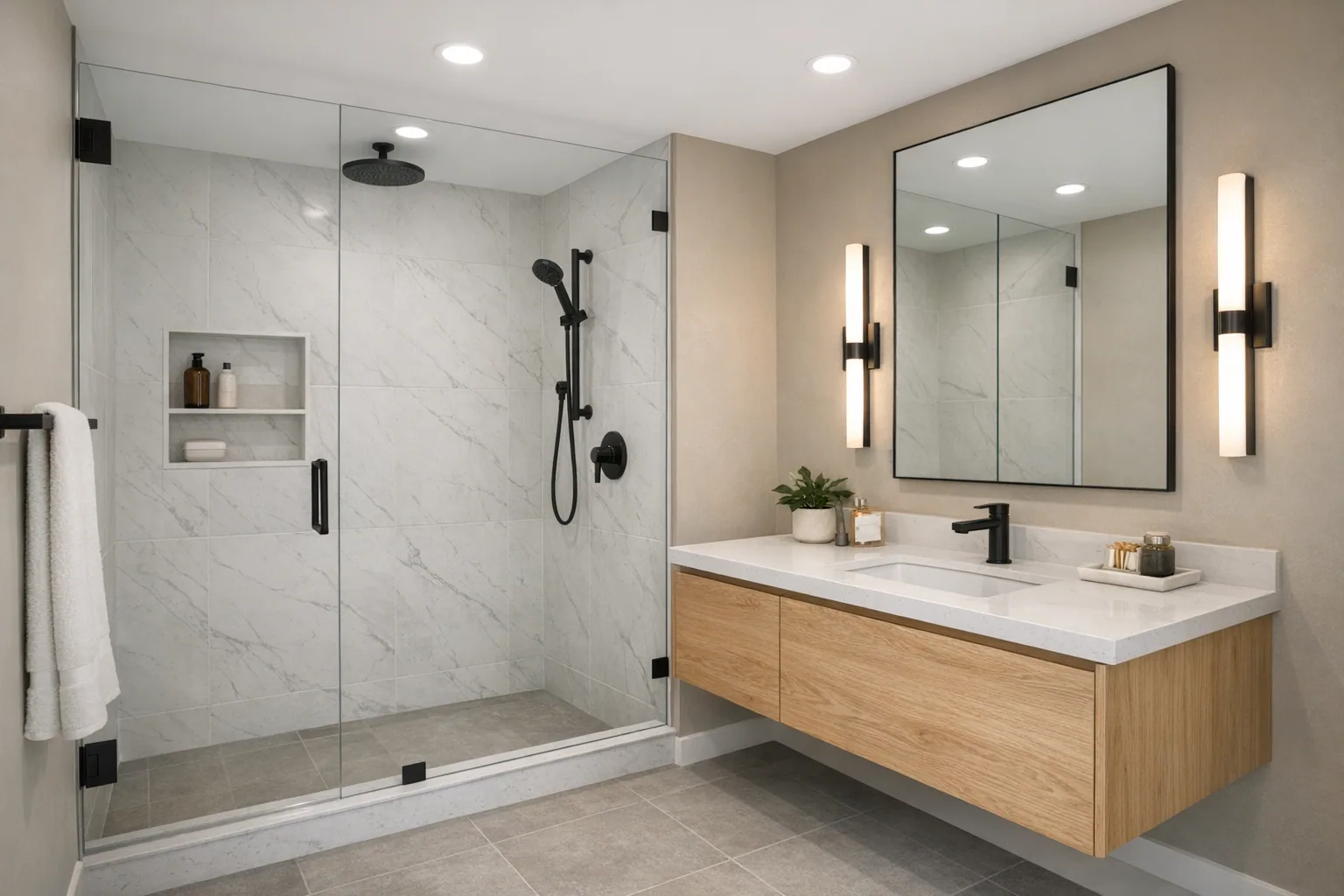 Bathroom Remodel Timeline in Concord: What to Expect
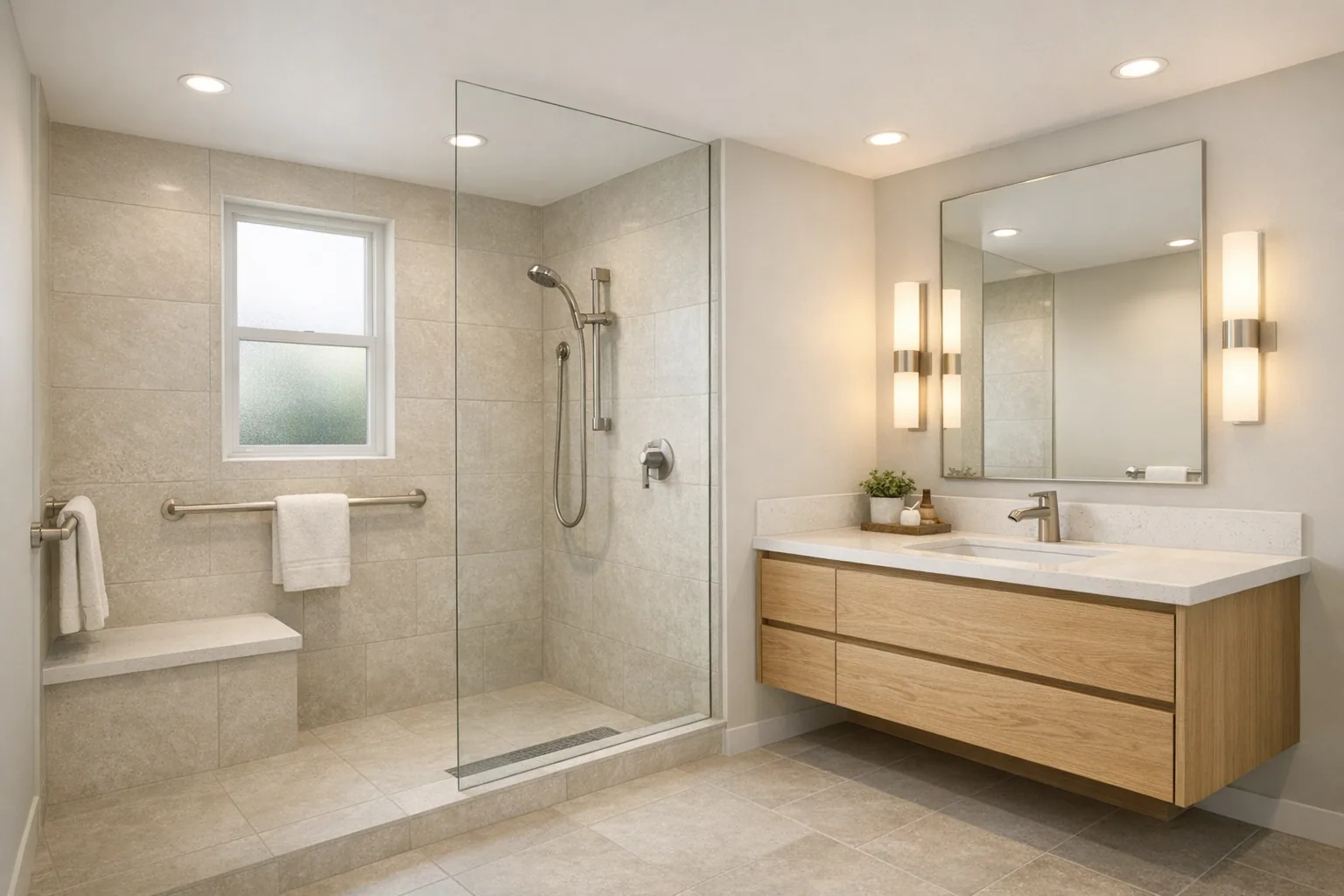 Aging-in-Place Bathroom Remodel Planning for Rossmoor Homes